
From condition audit to pressure testing, every cylinder that enters our facility follows the same disciplined process — here’s what actually happens on the floor.
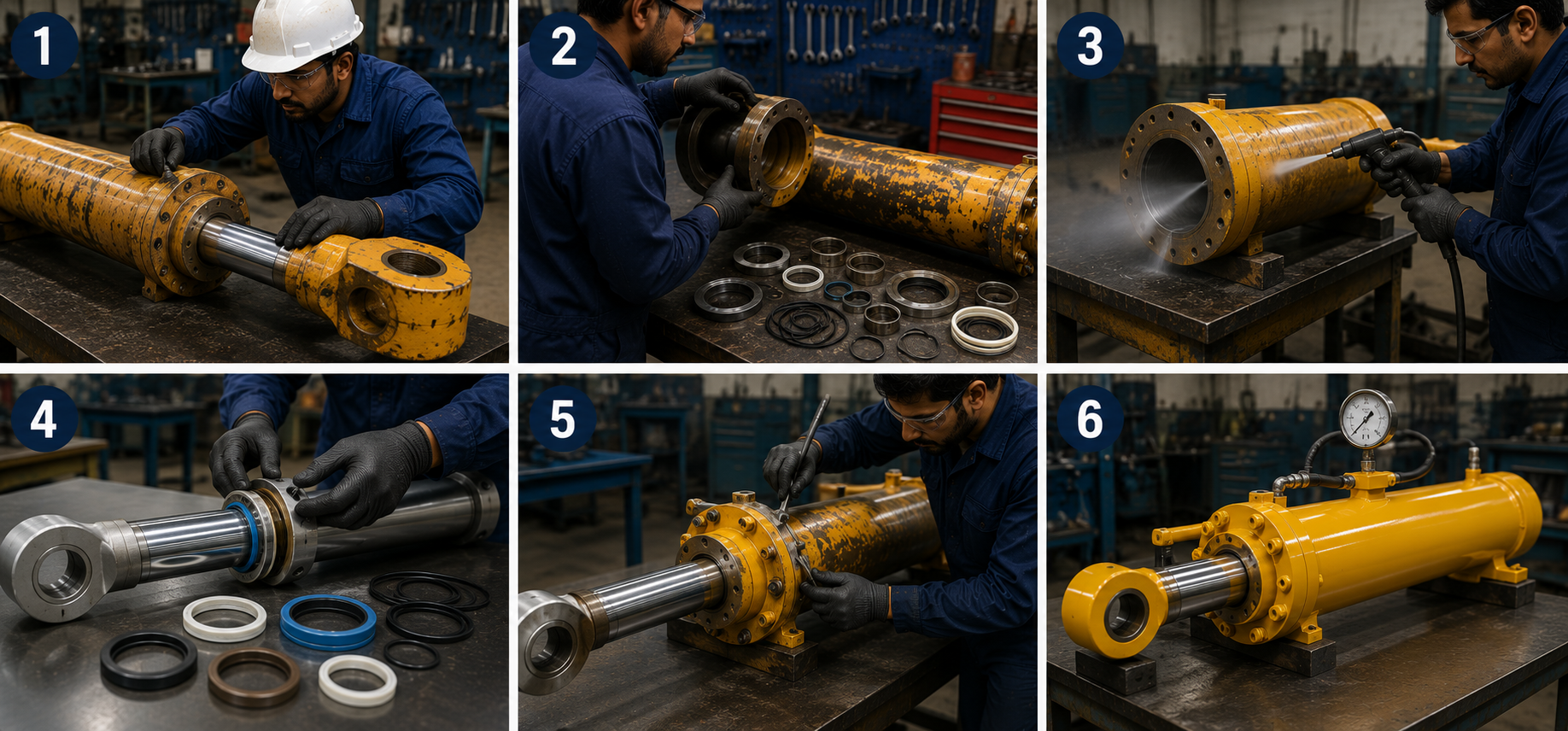
Not all “cylinder refurbishment” is created equal. The difference between a rebuild that lasts and one that fails again in six months often comes down to process discipline. At RAX, every cylinder — regardless of size or application — goes through the same six-step sequence.
- Receipt & Condition Audit. Every unit is logged and photographed on arrival. We conduct a full visual and dimensional inspection to identify the failure mode: corrosion, rod bending, bore ovality, or seal degradation.
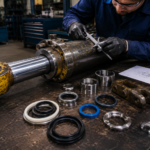
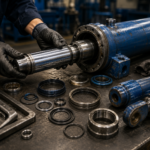
- Disassembly & Cleaning. The cylinder is fully stripped under controlled conditions. Each component is cleaned, catalogued, and photographed — creating a traceable record before any rework begins.
- Machining & Surface Repair. This is where most of the technical work happens. Piston rods are re-chromed or re-ground to original diameter and surface finish. Bores are honed to specification. Weld build-up is applied where wear demands it.
- Seal Replacement & Assembly. We use only premium seal brands — Freudenberg, Parker, Hallite, Merkel, and Hunger — matched precisely to groove dimensions and application pressure. Assembly happens in clean conditions with torque-controlled tooling.
- Pressure & Leak Testing. Every cylinder is tested at 1.25–1.5× its working pressure. We verify internal and external leakage, check stroke length, and confirm alignment before sign-off.
- Documentation & Dispatch. The final step is often the most overlooked — but it’s what separates a professional rebuild from a workshop patch-up. Every cylinder ships with an inspection report, test certificate, and dimensional record. Pre-dispatch customer inspection is available on request.
This process exists because a hydraulic cylinder on a steel mill or crusher isn’t a component you can afford to guess about. Whether it’s a routine service job or a critical continuous-duty unit with no OEM support available, the same six steps apply — because consistency, not shortcuts, is what keeps your equipment running.